
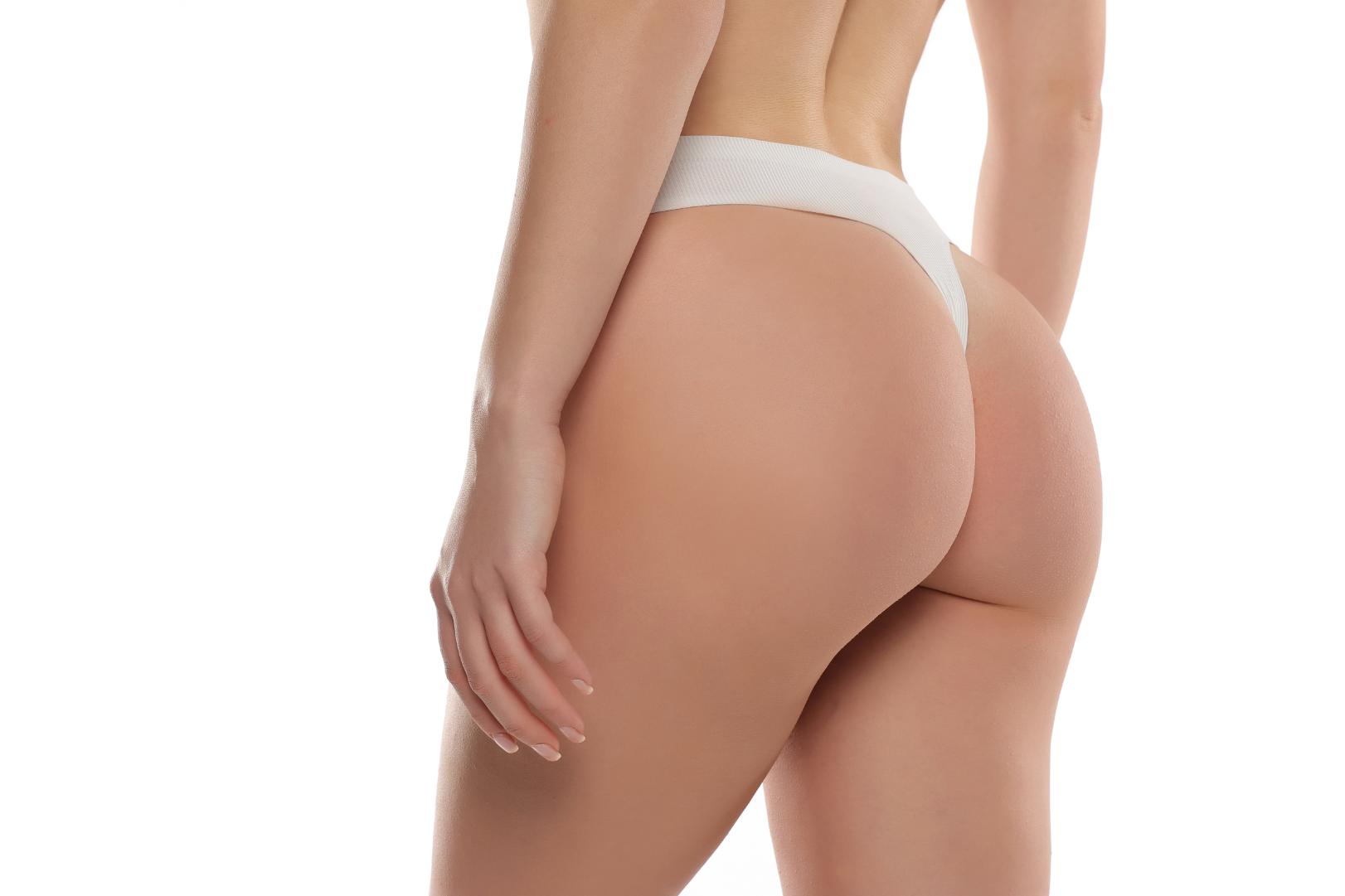
A fuller, more proportionate silhouette doesn’t always come naturally, even with consistent exercise and a healthy lifestyle. Genetics influence how your body stores fat, while weight fluctuations and aging can change the appearance of your buttocks over time. For patients who want more volume or definition, cosmetic surgery offers several possibilities.
Among today’s buttocks procedures, implants and fat transfer are two established options for enhancing shape and projection. Both can improve body contours, but they accomplish these changes in very different ways.
So, which approach makes more sense for your body? Before making a decision, it’s worth understanding how each procedure works, what recovery involves, and which results are realistic.
Continue reading to explore the differences and discover what to discuss during your consultation.
8 Differences Between Buttock Implants and Fat Transfer
Choosing a buttock enhancement procedure involves more than deciding how much volume you’d like to add. Your anatomy, available body fat, desired appearance, and willingness to undergo recovery all influence which technique may be appropriate.
1. The Source of Volume Is Different
The most important difference between these procedures is how they increase buttock volume. One uses manufactured implants, while the other transfers fat from your own body.
Buttock implants are solid silicone devices surgically positioned within the gluteal region. Unlike breast implants, which commonly contain silicone gel, buttock implants are designed with a firmer silicone material suited to the area.
Fat transfer, commonly known as a Brazilian butt lift or BBL, involves removing fat through liposuction. The collected fat is processed and carefully injected into the buttocks to improve their shape and fullness.
When comparing BBL vs. implants, patients should consider whether they prefer augmentation using their own tissue or a manufactured device. Neither approach is automatically superior, and each involves distinct benefits and limitations.
2. Your Body Type Influences Candidacy
Not everyone has the same starting point when considering buttock enhancement. Some patients have adequate fat deposits around their abdomen, waist, or thighs, while others have relatively little body fat available.
A BBL requires enough suitable donor fat to make the procedure worthwhile. Patients with limited fat reserves may not achieve their desired volume through fat transfer alone.
Buttock implants may be considered for slimmer patients who lack sufficient donor fat. Because the added volume comes from a silicone device, the procedure doesn’t depend on collecting fat elsewhere.
However, being thin doesn’t automatically make someone a good implant candidate. The surgeon must also assess tissue thickness, skin quality, muscle anatomy, and the amount of implant coverage available.
Patients researching buttock augmentation in Canton, MI, should expect a personalized evaluation rather than assuming their body type qualifies them for a particular technique.
3. Fat Transfer Can Reshape Other Areas
One appealing feature of fat transfer is that it can address more than the buttocks. The liposuction component allows surgeons to remove unwanted fat from selected donor areas while collecting tissue for transfer.
Common donor sites include the abdomen, flanks, lower back, and thighs. The chosen areas depend on where suitable fat is available and which contours the patient wants to improve.
For example, reducing excess fat around the waist may make the hips and buttocks appear more prominent. This contouring effect can complement the volume added through the transfer itself.
A fat transfer buttock procedure therefore involves two related changes: reducing fat in one area and adding volume to another. However, the amount of fat removed must remain appropriate for the patient’s anatomy and safety.
Buttock implants don’t require liposuction, although contouring may be considered separately when medically appropriate. Patients should understand that adding implants alone won’t necessarily change the appearance of their waist or thighs.
4. Implants Offer More Predictable Added Volume
Patients often want to know how much larger their buttocks will look after surgery. The answer depends partly on which procedure they choose. With implants, the surgeon selects a device with a defined volume and shape. This provides a more predictable amount of added volume, although the final appearance still depends on tissue coverage, placement, and healing.
Fat transfer is less predictable because not all transferred fat survives. Some of the injected fat is naturally reabsorbed during recovery, and the amount retained varies between patients. This means the appearance immediately after a BBL isn’t necessarily the final result. Early swelling can also make the buttocks look larger than they will once healing is complete.
For patients seeking substantial augmentation, implants may offer an advantage when donor fat is limited. However, the amount of enlargement possible with implants is still restricted by anatomy and surgical safety.
5. The Final Appearance Can Differ
Buttock enhancement isn’t simply about increasing size. The distribution of volume, surrounding body proportions, and quality of the overlying tissues all influence the final appearance. Fat transfer allows the surgeon to distribute small amounts of fat across selected areas of the buttocks. This can be useful when the goal involves refining contours or addressing certain areas of volume deficiency.
Because transferred fat becomes part of the surrounding tissue when it survives, the result may feel similar to natural body fat. Implants create volume through a solid device. Their appearance depends on the implant’s size, shape, placement, and how much natural tissue covers it.
Patients with thinner tissue coverage may have a greater risk of visible or palpable implant edges. Implant positioning can also influence how the buttocks look during movement. The most suitable gluteal enhancement technique depends on whether the patient’s priorities involve projection, contour refinement, or a combination of both.
6. The Surgical Process Is Different
Although both procedures involve surgery, their techniques differ considerably. Understanding what happens during each operation can help patients prepare for the experience. During buttock implant surgery, the surgeon makes an incision and creates a pocket for the silicone device. Depending on the surgical plan, the implant may be positioned within the gluteal muscle or in another appropriate plane.
The surgeon then positions the implant and closes the incisions. Drains may be used in selected cases to manage fluid accumulation during early recovery. A BBL begins with liposuction to remove fat from suitable donor areas. The collected fat is processed before being transferred to the buttocks through carefully placed injections.
Importantly, modern BBL safety recommendations call for fat to be injected only into the subcutaneous tissue above the gluteal fascia, not into the muscle. Real-time ultrasound guidance can help the surgeon confirm the injection plane. Patients should discuss the proposed surgical technique and safety precautions before undergoing either procedure.
7. Recovery Requires Different Precautions
Recovery is an important consideration because both procedures affect an area involved in sitting, walking, and everyday movement. After buttock implant surgery, patients can expect swelling, soreness, and restrictions designed to protect the incision sites and implant position. Pressure on the surgical area may need to be limited according to the surgeon’s instructions.
Fat transfer recovery involves healing in both the donor areas and the buttocks. Patients may experience bruising, swelling, and discomfort where liposuction was performed. Direct pressure on the transferred fat is commonly restricted during early BBL recovery. The exact recommendations for sitting, sleeping, and returning to normal activities vary by surgeon and procedure.
Patients should arrange help with household responsibilities when necessary and avoid rushing back into strenuous exercise. Although many people can resume lighter activities within a few weeks, complete healing takes longer. Following individualized postoperative instructions is particularly important because complications and recovery needs differ between techniques.

8. The Risks Aren’t the Same
Every cosmetic surgery involves risks, but buttock implants and fat transfer have different complication profiles. Understanding these differences is essential before making a decision. Buttock implant complications may include infection, bleeding, wound separation, fluid collections, implant displacement, and capsular contracture.
Some patients may eventually require revision surgery or implant removal. Fat transfer involves risks associated with liposuction, including contour irregularities, fluid accumulation, and infection. Transferred fat may also develop firm areas or fat necrosis.
One particularly serious risk associated with BBL surgery is pulmonary fat embolism. This can occur when fat enters damaged blood vessels and travels to the lungs, potentially causing a life-threatening emergency.
Patients researching a safe BBL should understand that no surgical procedure is completely risk-free. Safety depends on appropriate patient selection, surgical technique, facility standards, and the surgeon’s training.
For fat transfer, patients should specifically ask about subcutaneous-only injection and real-time ultrasound guidance. These precautions are important because injecting fat into the gluteal muscle or deeper tissues increases the danger of fat embolism.
Find Your Best Fit
Choosing between implants and fat transfer involves more than deciding how much volume to add. Both buttocks procedures can improve shape and proportion, but they differ in surgical technique, candidacy, recovery, and long-term considerations.
At Bazzi Plastic Surgery in Canton Township, MI, patients can explore personalized buttock enhancement options through a consultation focused on their anatomy and aesthetic goals. Discuss your preferences, understand the available approaches, and take the next step toward an informed surgical decision.
Call us today!